How to Fly FPV in Zero Line
Approach angles, kamikaze timing, battery discipline, and vision tactics for players, trucks, and helis.
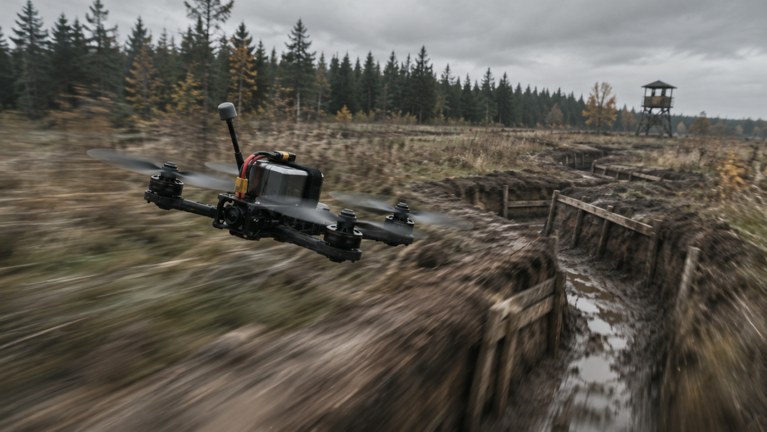
Flying in Zero Line means living inside a first-person kamikaze drone. You are not a floating third-person camera—you are the missile, the scout, and the dogfighter at once. This guide teaches how to fly, how to kamikaze, and how to beat enemy drones while hunting players, trucks, and helicopters. It assumes you already know where the binds live; if not, read controls first, then come back.
Zero Line supports PC, mobile, tablet, and console in online sessions up to 18 players. The physics feel of each platform differs slightly, but the tactics below transfer: manage battery, pick an approach angle, use thermal or night vision when you own them, and only commit the dive when the target cannot slide out of frame.
Core FPV flight basics
Start every sortie with a climb. Altitude buys time to read the battlefield, spot heat on thermal, and choose a dive line that is not blocked by a building. Strafe with small inputs; large stick dumps throw the camera and waste propeller energy. Keep the horizon roughly level until you decide to pitch into a strike.
Throttle your aggression to your battery. A half-full battery supports one serious hunt and a bailout. A near-empty battery supports a single committed dive—or a return to base. The pilots who climb the 55-level track fastest are not the ones who never crash; they are the ones who crash on purpose into valuable targets instead of into the ground after a panic turn. Battery upgrades from the drone upgrades guide make these decisions easier, but habits matter more than tiers on day one.
Practice the four moves until they are boring: climb, translate, gentle yaw to keep a target centered, and controlled pitch-in. Only then add fire and kamikaze commits. The getting started checklist is enough orientation; this page is the skill layer on top.
How to kamikaze cleanly
A good kamikaze is a planned dive, not a hopeful crash.
- Acquire the target with visual, night vision, or thermal.
- Align so the target sits near the center of the FPV view with room to correct.
- Commit altitude—pitch in from above or from a shallow slant that still leaves steering room.
- Correct late with tiny inputs; early over-corrections create corkscrews.
- Accept the trade once you are inside the final second—fighting the dive usually means missing.
Against players, prefer angles that limit their sprint sideways—cut them off relative to cover rather than chasing from directly behind forever. Against trucks, lead the motion slightly and dive at the cabin or mass center so a last-second turn still clips. Against helicopters, climb first, match their vector, then dive from above or ahead of their nose so they fly into your line.
If you miss, do not instantly reverse into a second miracle dive on empty battery. Climb, reacquire, or redeploy. Missed kamikazes teach more when you survive to try the corrected angle.
How to beat enemy drones
Enemy drones are the skill check. They shoot back, they contest your dives, and they steal your vehicle kills.
- Spot early. Thermal helps in clutter; otherwise watch for motion above ridgelines.
- Do not mirror panic. If they spam turns, climb through their turn instead of matching every roll.
- Force vertical fights when your propellers are upgraded; climb advantage often beats flat circles.
- Shoot when a dive is dumb. Gun kills on drones preserve your airframe for a later vehicle kamikaze.
- Bait overcommit. Feint a dive on a truck, then pitch up into a drone that followed you down.
Loadout matters. Propellers and batteries win most drone duels; antennas help if the fight stretches away from spawn; thermal is a bonus, not a requirement. Compare airframes on the drones tier list and spending order on upgrade priority so you are not under-motored in a knife fight.
Battery management under pressure
Treat battery as a third health bar.
- Start hunts with a reserve plan: “If I am not on target by 30%, I climb home.”
- Vision toggles cost attention—flash thermal, do not leave it on while you forget the meter.
- After a gun exchange, check battery before chasing a fleeing helicopter across the map.
- Land or despawn intentionally when the sortie has already paid for itself via mission credit.
Mission progress from missions and levels should influence when you take risks. If a weekly only needs one more truck, a low-battery kamikaze is justified. If you still need five drone kills, preserve the airframe.
Using thermal and night vision in flight
Night vision keeps terrain readable in the dark so you do not invent a wall with your propeller. Use it for navigation and final approach when lighting fails.
Thermal highlights heat—players and vehicles pop. Use short flashes to scan a sector, then dive with a clearer visual once you know where the heat sits. Staring through thermal for an entire flight can hide fine geometry; mix modes.
Bind comfort is mandatory. If the toggle is awkward, fix it in Settings using the notes on controls before you blame the camera upgrade. Buy the modules in a sensible order from drone upgrades so you are not toggling empty features.
Hunting trucks, helicopters, and players
Trucks move on readable routes. Orbit high, pick a crossing angle, and dive where the road forces them straight. Thermal reacquisition after a near miss saves the second attempt.
Helicopters demand climb and propeller investment. Approach from above or ahead, not from a long helpless chase below their belly. If they flare away, break off early instead of spending the whole battery on a hopeless stern chase.
Players jink and use cover. Attack when they are busy—mid-sprint between buildings, focused on another drone, or clustered near objectives. A slightly steeper dive reduces their ability to strafe out of frame.
In busy 18-player servers, call your own priority: vehicles for mission cash, drones when someone is bullying your lane, players when a daily demands it. Random aggression without a priority burns battery and teaches little.
Drills that actually transfer
- Silent orbits: three circles over a landmark without firing, battery above 50% at the end.
- Aborted dives: pitch in on a truck, then climb away on purpose at the last second to practice recovery.
- Thermal scan laps: two-second thermal pulses every five seconds while translating across a block.
- Drone disengage: take one shot at an enemy drone, then leave—learn that not every fight is mandatory.
Run these after buying new propeller tiers; speed changes make old dive timing wrong. Check updates when flight feel shifts after a patch, and send FEEDBACK/BUG through Settings if something feels unintentionally broken.
Putting it together
A strong Zero Line pilot climbs with intent, scans with vision tools, spends battery on valuable targets, and only kamikazes when the geometry is honest. Use controls to keep inputs clean, drone upgrades to buy time and speed, missions and levels to aim your farm, and the tier lists to choose which drone deserves the next stack of cash. First-person kamikaze combat rewards patience disguised as aggression—line up, commit once, and make the crash count.
Frequently Asked Questions
Quick answers for Zero Line pilots.
How do I kamikaze in Zero Line?
Climb, center the target, pitch into a controlled dive, make tiny late corrections, and commit in the final second. Abort early if battery or angle is bad.
How do I beat other drones?
Spot early, fight vertically when your propellers allow, shoot when a dive is unwise, and avoid mirroring panic turns. Batteries and props matter most.
When should I use thermal versus night vision?
Use thermal to find heat from players and vehicles. Use night vision to read terrain in the dark. Flash modes as needed instead of flying blind in one filter.
How do I manage battery during a hunt?
Set a reserve threshold before you launch, re-check after gunfights, and only spend the last percent on a high-value kamikaze or a safe return.
What angle works best on helicopters?
Climb first, approach from above or ahead of their nose, and break off early if they flare away on empty geometry. Propeller upgrades help a lot.